

AI Authors: Will Your Next Favorite Book Be Written by a Machine?
Explore the impact of AI on literature, from machine-generated books to enhanced storytelling tools. Discover whether your next favorite book could be written by a machine and what this means for the future of reading and writing.
Author

D Team
28 Aug 2024
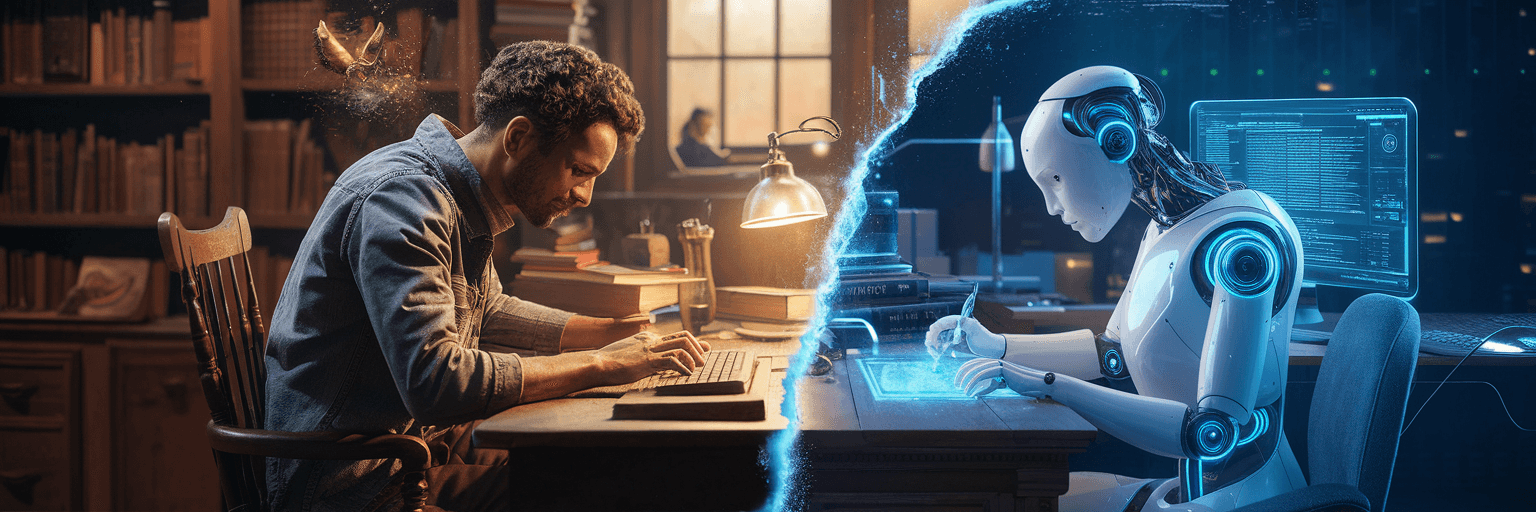
The question of whether your next favorite book could be written by a machine is both intriguing and complex. With AI’s growing capabilities, the literary world is undergoing a transformation that challenges traditional notions of authorship and storytelling. This exploration delves into how AI is influencing literature, the potential and limitations of machine-generated books, and what the future holds for both writers and readers.
AI’s Role in Literature
AI’s influence on literature is expanding, with advanced algorithms assisting writers in the creative process. AI can generate ideas, suggest plot twists, and even co-write sections of narratives, making it a valuable tool for authors seeking to push the boundaries of storytelling.
How AI is Used in Writing:
Idea Generation: AI can help authors brainstorm by generating ideas based on themes, genres, or character prompts.
Content Creation: Using natural language processing, AI can draft coherent sections of text, assist with dialogue, or write descriptive passages.
Editing and Analysis: AI tools can provide feedback on grammar, style, and tone, helping authors refine their work.
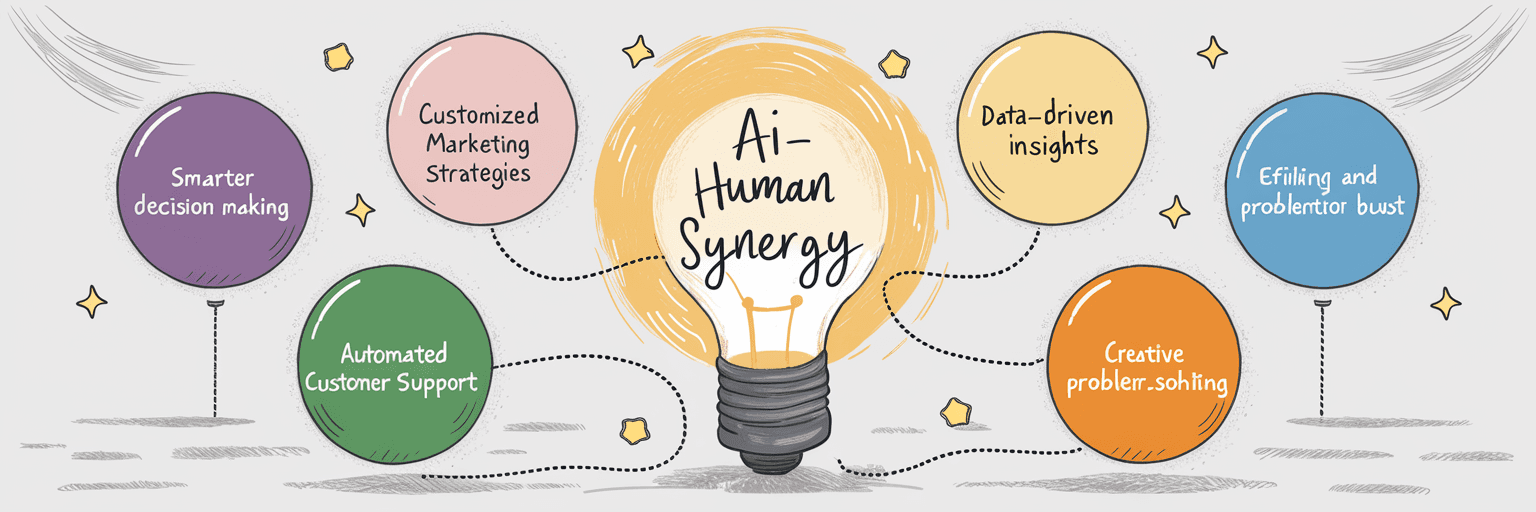
The collaboration between human creativity and machine intelligence is redefining traditional authorship, creating a hybrid approach that blends the strengths of both.
AI-Generated Books
Several books have already been authored by AI, showcasing the potential of machines to create engaging narratives. Examples include "1 the Road" by Ross Goodwin, an AI-driven narrative of a road trip, and "Christie’s Haunted Dollhouse," a detective story crafted by an AI trained on Agatha Christie’s works. These examples highlight AI's ability to mimic human writing styles and generate creative content that resonates with readers.
Key Features of AI-Generated Literature:
Mimicking Style: AI can be trained on specific authors' works to replicate their style, creating new stories that feel familiar to fans.
Creative Innovation: Beyond imitation, AI can generate novel storylines by combining elements from various genres or styles, offering fresh reading experiences.
However, while AI can produce grammatically correct and stylistically coherent texts, it often falls short in areas such as emotional depth, cultural context, and authentic human experience, which are core to truly compelling literature.
Impact on Reading and Writing
AI is not only changing how books are written but also how they are consumed. AI-driven recommendation systems personalize reading experiences, helping readers discover books tailored to their preferences. Adaptive storytelling platforms further enhance reader engagement by customizing narratives based on reader choices, creating a more immersive and interactive experience.
Personalized Content: AI-powered recommendation engines like those used by Amazon and Netflix analyze user behavior to suggest books that align with personal tastes, making discovery more intuitive.
Adaptive Storytelling: Platforms like "Chooseco" offer dynamic narratives that evolve based on the reader’s choices, making each reading experience unique.
These innovations are reshaping how we interact with literature, blending traditional storytelling with interactive technology.
Challenges and Ethical Considerations
The integration of AI into literature raises several ethical and practical questions. One major concern is the preservation of human creativity and the authenticity of AI-generated content. While AI can produce text that is technically proficient, it often lacks the emotional resonance and unique voice that human authors bring to their work.
Key Challenges:
Preservation of Human Creativity: As AI’s role in literature grows, there is a risk that reliance on algorithms could dilute the originality of human storytelling.
Authenticity and Emotional Depth: AI-generated works may lack the personal imperfections and quirks that make human writing relatable and engaging.
Authorship and Copyright Issues
Authorship and copyright are contentious issues when it comes to AI-generated works. Current copyright laws generally require human authorship, and since AI lacks legal personhood, it cannot be considered an author under existing legal frameworks. This creates challenges in determining ownership and credit for AI-generated content, and it raises questions about who should benefit from the commercial success of such works.
Legal Implications:
Ownership: As AI becomes more integrated into writing, legal systems will need to address how authorship is attributed and how intellectual property rights are managed.
Credit: Should AI be credited as a co-author, or does the responsibility fall solely on the human collaborator?
These issues highlight the need for updated legal frameworks that recognize the evolving nature of creativity in the digital age.
The Human Touch
Despite AI’s capabilities, there remains a strong argument for maintaining the human touch in literature. Authenticity, emotional resonance, and the ability to connect with readers on a personal level are key elements that draw audiences to human-authored works. While AI can mimic style and structure, it struggles to replicate the lived experiences, cultural influences, and nuanced emotional expressions that human authors infuse into their stories.
Authenticity: Human authors bring a unique voice and perspective shaped by personal experiences, cultural background, and emotional insights.
Relatability: Readers often seek a connection with the author, which is challenging to establish with AI-generated works.
The Future of AI in Literature
As AI technology advances, it is expected to play an increasingly significant role in the creative process, providing real-time suggestions and innovative ideas that can enhance storytelling. However, the essence of literature—its ability to capture the human condition—is likely to remain a uniquely human endeavor.
Future Prospects:
Enhanced Collaboration: AI will likely become a more integrated part of the creative toolkit, supporting authors in refining their ideas and exploring new narrative possibilities.
New Storytelling Formats: AI could help pioneer new forms of literature, blending text with interactive media, creating richer, more engaging experiences.
Derivative GPT Insight
From a research-driven perspective: AI is poised to make significant contributions to the world of literature, offering tools that can enhance the creative process and broaden access to storytelling. While it is conceivable that your next favorite book could be written by a machine, it is more likely that AI will serve as a powerful collaborator that complements human creativity rather than replacing it. The future of literature will likely see an ongoing partnership between human ingenuity and AI innovation, creating new possibilities for expression and narrative form.
Conclusion
While AI can generate compelling narratives, it cannot fully replicate the emotional depth, cultural context, and unique voice of human authors. AI is best seen as a collaborator, enhancing the creative process rather than replacing it. The future of literature will likely be a blend of human and machine efforts, where AI assists authors in pushing the boundaries of storytelling while maintaining the irreplaceable human touch.