

The Music of Tomorrow: Can AI Compose Hit Songs and Replace Human Musicians?
Explore the evolving role of AI in music composition, its potential to create hit songs, and whether it could ever replace human musicians. Dive into the blend of technology and artistry shaping the future of music.
Author

D Team
28 Aug 2024
Artificial Intelligence (AI) is making significant inroads into the music industry, challenging traditional roles and redefining what it means to create music. With the ability to compose songs that sound professional and even innovative, AI raises important questions: Can it truly create hit songs? Will it replace human musicians, or will it serve as a tool to augment human creativity? This article delves into AI's growing presence in music, examining its capabilities, the irreplaceable human elements of musicianship, and the future of AI-generated music.
AI in Music Composition
AI music composition leverages advanced algorithms and machine learning models to create music by analyzing vast datasets of existing songs. Through deep learning and neural networks, AI can identify patterns, styles, and structures in music, enabling it to generate new compositions that mimic or innovate upon these learned styles.
Key AI Tools in Music Composition:
Google’s Magenta: A project that explores the role of machine learning in the creative process, enabling AI to create music and art.
OpenAI’s MuseNet: Capable of generating songs with up to 10 different instruments in a wide range of genres, demonstrating AI’s versatility in music creation.
These tools can produce anything from classical symphonies to modern pop tracks, showing that AI can not only replicate existing music styles but also blend them in novel ways. The potential of AI in music is vast, ranging from automated background music for videos and games to the creation of full-length albums.
The Human Element in Music
Despite AI's technical achievements, human-created music possesses qualities that are inherently difficult for AI to replicate. Human musicians infuse their work with emotional depth, cultural context, and personal experiences, elements that resonate deeply with listeners.
Emotional Expression: Music is not just about notes and rhythms; it’s a form of emotional expression. Human musicians convey stories, struggles, and joys through their compositions, creating connections that AI-generated music currently struggles to achieve.
Creativity and Improvisation: Human creativity is not merely about combining existing patterns; it’s about breaking rules, improvising, and taking risks that machines might avoid due to their programmed nature. The ability to experiment and adapt in real-time, such as in live performances, adds a layer of authenticity that AI lacks.
Cultural Influence and Storytelling: Human musicians draw from their cultural backgrounds, personal histories, and societal contexts. This cultural storytelling adds depth and meaning that cannot simply be programmed into an AI model.
While AI can produce music that sounds technically polished, it often lacks the nuanced emotional expression that makes music truly impactful. For now, the unique human touch in music remains irreplaceable.
AI as a Tool, Not a Replacement
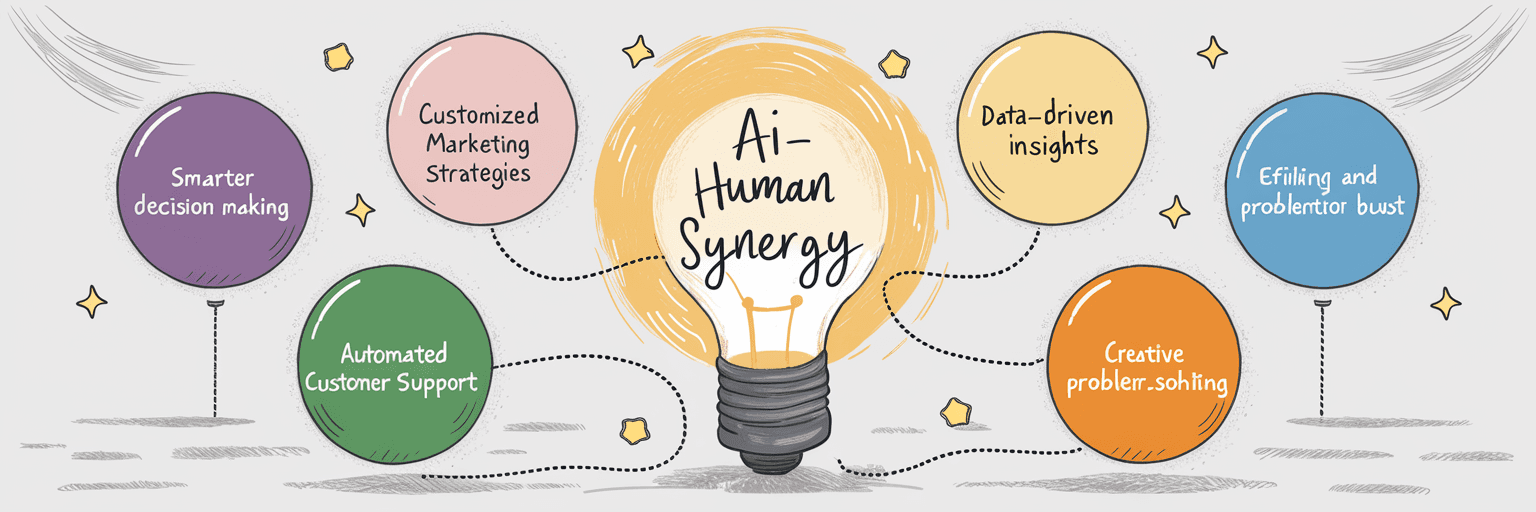
Rather than seeing AI as a threat, many view it as a powerful tool that enhances the creative process. AI can assist musicians by suggesting new melodies, harmonizing existing tracks, or generating rhythm patterns that inspire new directions in composition.
Creative Collaboration: AI can act as a collaborator, providing fresh ideas and helping to overcome creative blocks. For instance, an artist might use AI to generate a baseline melody, which they can then refine and personalize.
Speed and Efficiency: AI speeds up the composition process by handling repetitive tasks and quickly generating multiple versions of a track. This allows musicians to focus more on the creative aspects rather than the technical ones.
Accessibility and Democratization: AI tools lower the barriers to music creation, allowing people without formal musical training to compose and produce their own music. This democratization broadens the range of voices in the music industry, fostering innovation and diversity.
The Future of AI-Generated Music
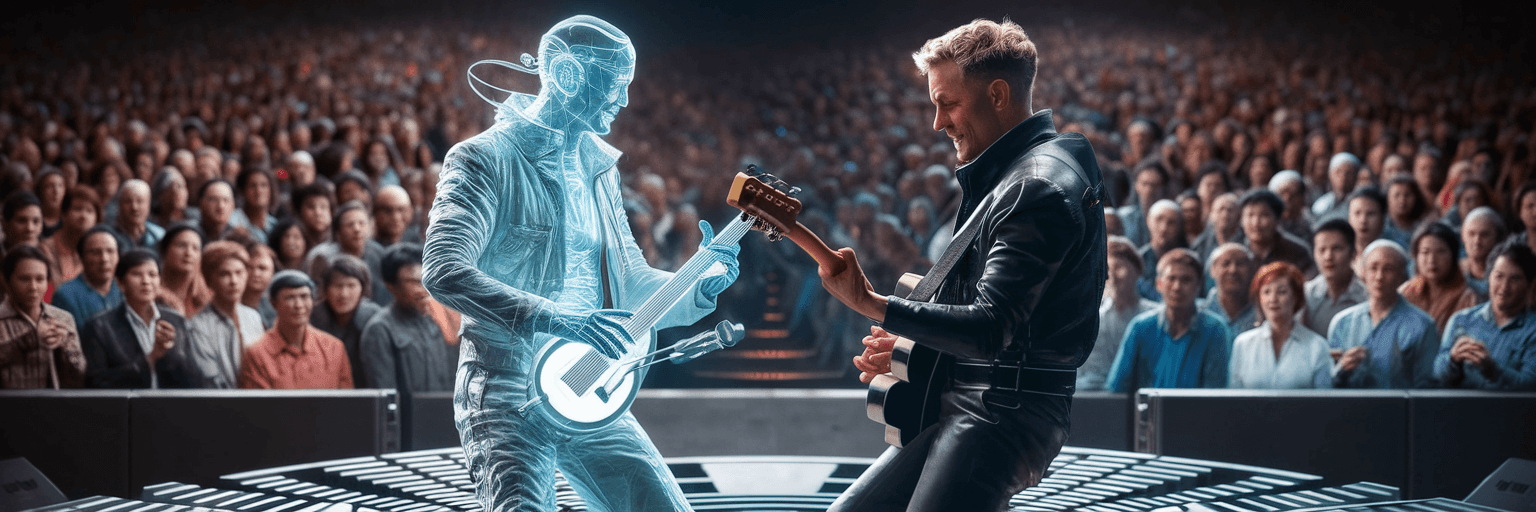
The future of music is likely to be a blend of AI and human creativity. While AI will continue to evolve and improve its ability to compose music, it is unlikely to completely replace human musicians. Instead, AI will serve as an invaluable assistant that expands the possibilities of music creation.
AI as a Music Partner: As technology advances, we can expect to see more collaborations between AI and human artists, leading to new genres and innovative musical experiences that would not be possible with either alone.
Ethical and Legal Considerations: The rise of AI-generated music also brings up questions about copyright, authorship, and the value of human artistry. Who owns an AI-generated song? How should artists be credited when AI plays a significant role in the creative process? These are important discussions that the industry will need to address.
Expanding Creative Horizons: AI can push creative boundaries by generating sounds and compositions that humans may not think of. This opens new horizons in music, challenging artists to rethink what is possible and inspiring a new wave of musical experimentation.
Derivative GPT Insight
From a research-driven perspective: AI's influence on music composition is undeniable. It offers unprecedented tools that enhance creativity, reduce production time, and democratize music creation, making it accessible to a broader audience. However, AI is unlikely to replace human musicians entirely. The emotional depth, cultural storytelling, and improvisational skills that human musicians bring to their art remain uniquely irreplaceable. As AI continues to evolve, it will likely serve as a powerful collaborator that complements and elevates human creativity, driving the music industry toward exciting new frontiers.
Conclusion
AI can compose music and even create hits, but the artistry, emotional resonance, and cultural depth of human musicians cannot be fully replicated. Rather than replacing musicians, AI is poised to become a valuable tool that enhances the creative process, enabling artists to explore new musical landscapes. The future of music will likely be a harmonious blend of human ingenuity and AI innovation, each amplifying the strengths of the other.