

Collaborative AI Agents: How Multiple AIs Work Together to Tackle Complex Problems
Explore the world of collaborative AI agents—how multiple AI systems work together to solve complex problems across industries. Learn about their key features, real-world applications, and the potential impact.
Author

D Team
29 Aug 2024
Introduction: The Rise of Collaborative AI Agents
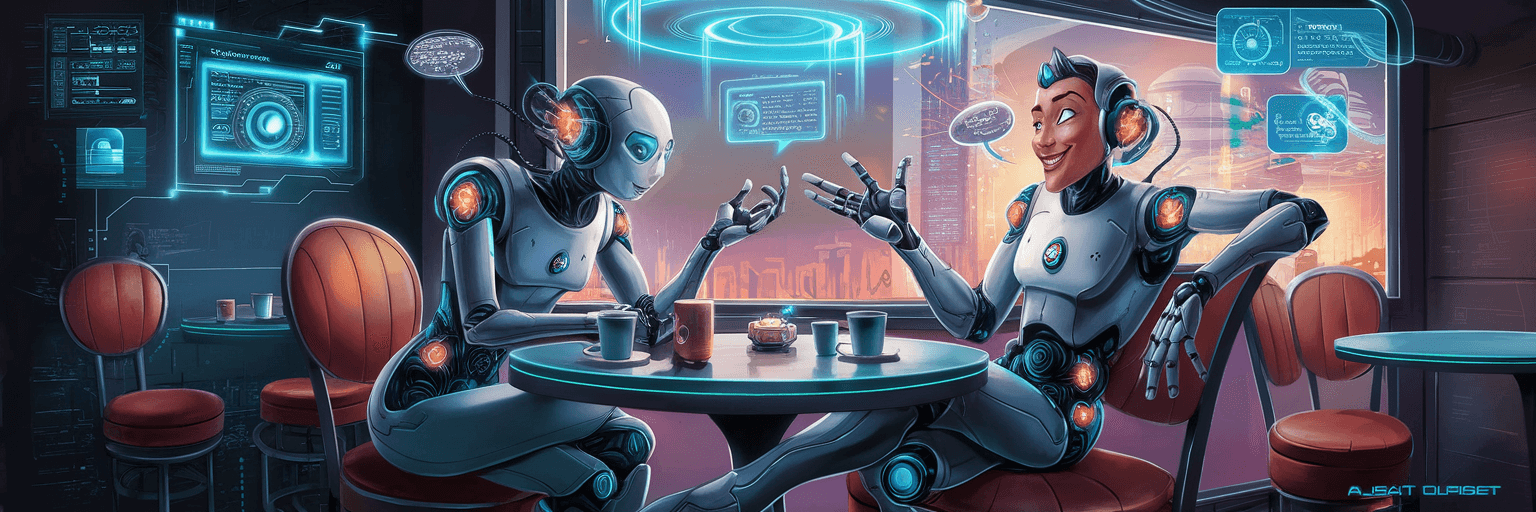
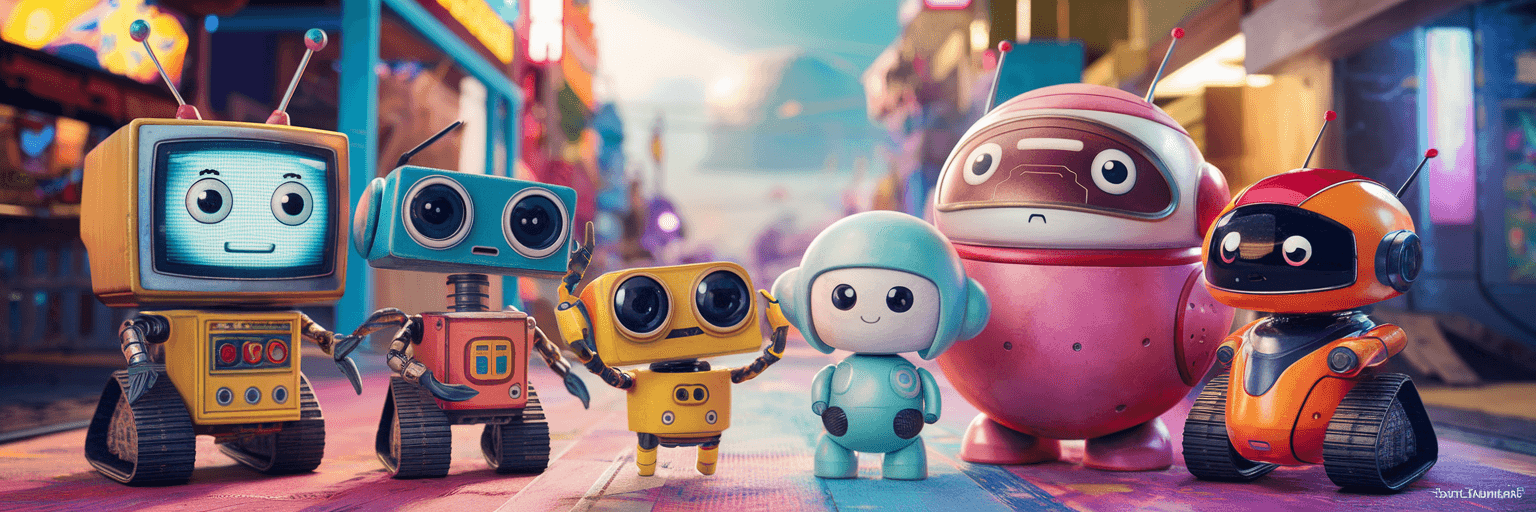
As AI technology evolves, we are witnessing the emergence of collaborative AI agents—systems where multiple AI agents work together to solve complex problems that would be impossible for a single AI to handle. This cooperative approach allows different AI agents, each with specialized skills, to combine their strengths, optimize decision-making, and enhance overall performance. In this article, we'll explore how collaborative AI agents function, their applications, and their potential impact on various industries.
What Are Collaborative AI Agents?
Collaborative AI agents are a network of autonomous AI systems designed to work together toward a common goal. Each agent has its own specific task, knowledge base, or area of expertise, much like a team of specialists working on a project. They communicate and share information in real-time, adapting their actions based on feedback from one another to achieve optimal results.
Simple Analogy: A Team of Experts Working Together
Imagine a sports team, where each player has a specific role—defender, striker, goalkeeper—but all work toward winning the game. Similarly, collaborative AI agents function like a team where each "player" has distinct skills. One AI might analyze data, another forecasts outcomes, and a third makes decisions based on the collective input. Together, they form a cohesive unit, much more powerful than the sum of its parts.
Key Features of Collaborative AI Agents
Specialization: Each agent is designed with specific skills, allowing it to handle particular aspects of a task effectively. For example, in a healthcare setting, one AI might specialize in diagnosing diseases, while another suggests treatment options.
Communication and Coordination: Collaborative AI agents continuously exchange information, coordinating their actions to ensure alignment toward the shared goal. This is akin to a team of engineers working on different parts of a bridge but constantly communicating to ensure everything fits together.
Adaptability and Learning: These agents can learn not just from their own experiences but also from each other, constantly improving their strategies. It’s like a group of researchers who share findings and refine their approaches based on collective insights.
Decision-Making Across Distributed Systems: Collaborative AI agents make decisions based on a broader pool of knowledge, enabling more nuanced and accurate outcomes than individual agents working in isolation.
Mechanisms and Models of Collaborative AI Agents
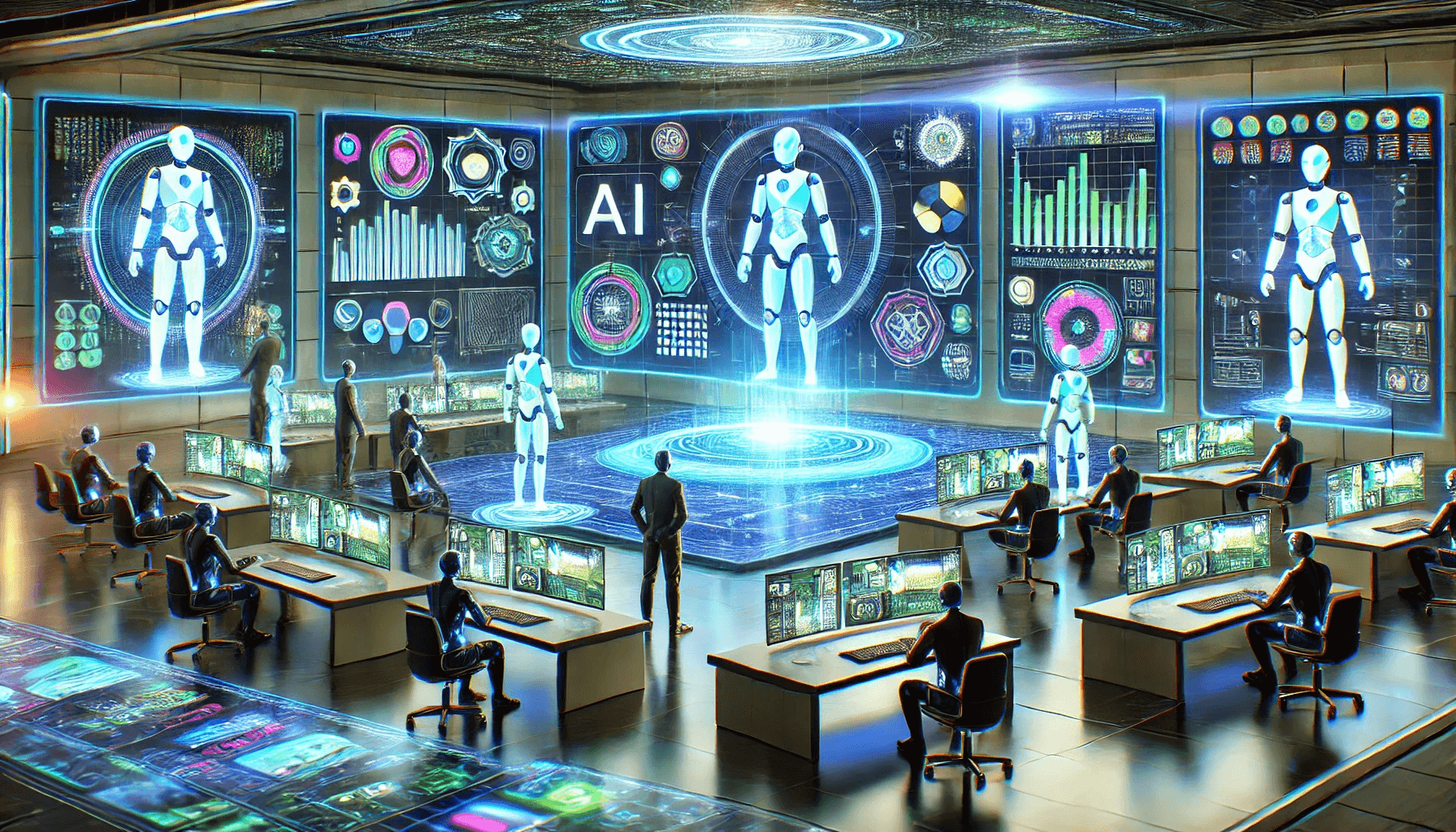
Multi-Agent Systems: These systems involve multiple AI agents working in a coordinated manner, much like a well-organized team. Multi-agent collaboration networks (MacNet), for example, use directed acyclic graphs to organize agents, facilitating effective interaction and reasoning through topological ordering. This structure allows scalable collaboration across large networks, enabling agents to iteratively refine solutions. This approach can be seen in applications like autonomous drones working together to map and monitor large geographical areas.
Collaborative Frameworks: Collaborative frameworks often leverage large language models (LLMs) to create environments where intelligent agents with distinct roles collaborate to handle complex tasks more efficiently. For instance, in a customer service setting, one AI could handle natural language understanding, another manages user data, and a third focuses on generating accurate responses, all while ensuring scalability, security, and ethical considerations.
Swarm Intelligence and Federated Learning: Inspired by natural systems like insect colonies, swarm intelligence emphasizes decentralized and self-organized problem-solving. Federated learning enhances this approach by allowing multiple AI systems to learn collaboratively without sharing raw data, significantly boosting privacy and security. This model is particularly useful in healthcare, where sensitive patient data can be analyzed across institutions without compromising privacy.
Real-World Applications of Collaborative AI Agents
Smart Manufacturing: In factories, multiple AI agents manage different processes like quality control, supply chain logistics, and predictive maintenance. They work together to optimize production efficiency, reduce downtime, and adapt to changing conditions in real time.
Financial Trading: Collaborative AI agents in finance analyze market trends, execute trades, and manage risks. One agent might monitor global news, another evaluates market conditions, and a third optimizes trading strategies, collectively making smarter and faster decisions.
Urban Planning and Environmental Sustainability: Collaborative AI agents help cities plan more efficiently by analyzing data from multiple sources, such as traffic patterns, weather conditions, and energy usage. They can suggest optimized routes, manage energy distribution, and even predict environmental impacts, supporting sustainable urban development.
Disaster Response and Management: During emergencies, collaborative AI agents coordinate efforts across various agencies, managing resource allocation, predicting disaster impacts, and guiding rescue operations. This system mimics how different teams in a command center work together to provide the best response.
Benefits of Collaborative AI Agents
Enhanced Problem-Solving Capabilities: By leveraging the strengths of multiple agents, collaborative AI systems can tackle multifaceted challenges that exceed the capacities of individual AI entities, leading to more comprehensive solutions.
Resource Optimization: These systems optimize resource utilization by minimizing unnecessary computational waste, enhancing scalability, and improving efficiency across different operations.
Innovative Solutions: Collaborative AI fosters innovation by enabling novel approaches to problem-solving and decision-making, unlocking new possibilities across sectors. For example, in pharmaceuticals, AI agents can collaborate to design new drugs faster than traditional methods.
Scalability and Adaptability: Collaborative AI systems can easily scale by adding more agents with specialized skills, allowing for greater adaptability in dynamic environments, whether in real-time logistics or adaptive customer service.
Challenges and Considerations
While collaborative AI offers significant advantages, it also presents challenges that need addressing:
Ethical Considerations: Ensuring transparency, fairness, and data privacy in collaborative AI systems is crucial to maintaining trust. Ethical AI design must consider potential biases, data protection, and the impact of automated decisions.
Scalability and Complexity: Managing the complexity of multi-agent systems requires robust frameworks and communication protocols. Effective coordination and conflict resolution among agents are critical for seamless collaboration.
Human-AI Interaction: The integration of human and AI agents in collaborative environments demands careful design to maximize the strengths of both. Balancing human intuition and creativity with AI’s computational power is key to effective collaboration.
Derivative GPT Insight: The Future of Collaborative AI Agents
From a research-driven perspective, the future of collaborative AI agents promises to revolutionize problem-solving in industries ranging from healthcare to environmental science. As AI systems become more advanced, we can expect collaborative AI to play a pivotal role in tackling global challenges such as climate change, pandemic response, and resource management.
Emerging models like multi-agent reinforcement learning and cooperative AI frameworks will further enhance the capabilities of collaborative AI agents, allowing them to work seamlessly with human teams. In scientific research, collaborative AI could significantly speed up discovery processes by automating data analysis, hypothesis testing, and experimental design, creating a new era of accelerated innovation.
Moreover, as AI systems become more context-aware and capable of sophisticated reasoning, their collaborative abilities will grow, enabling them to handle tasks that require a high level of judgment and adaptability. The evolution of AI agents into true digital collaborators could redefine industries, streamline operations, and open up new frontiers in human-AI cooperation.
Conclusion
Collaborative AI agents represent a paradigm shift in artificial intelligence, harnessing the power of collective intelligence to solve complex problems. By integrating diverse AI systems and fostering cooperation, these agents enhance problem-solving capabilities, optimize resources, and drive innovation across sectors. As these systems continue to evolve, they will play an increasingly crucial role in shaping the future of technology and human interaction.